

them, who would've ate ice cream at lynchings

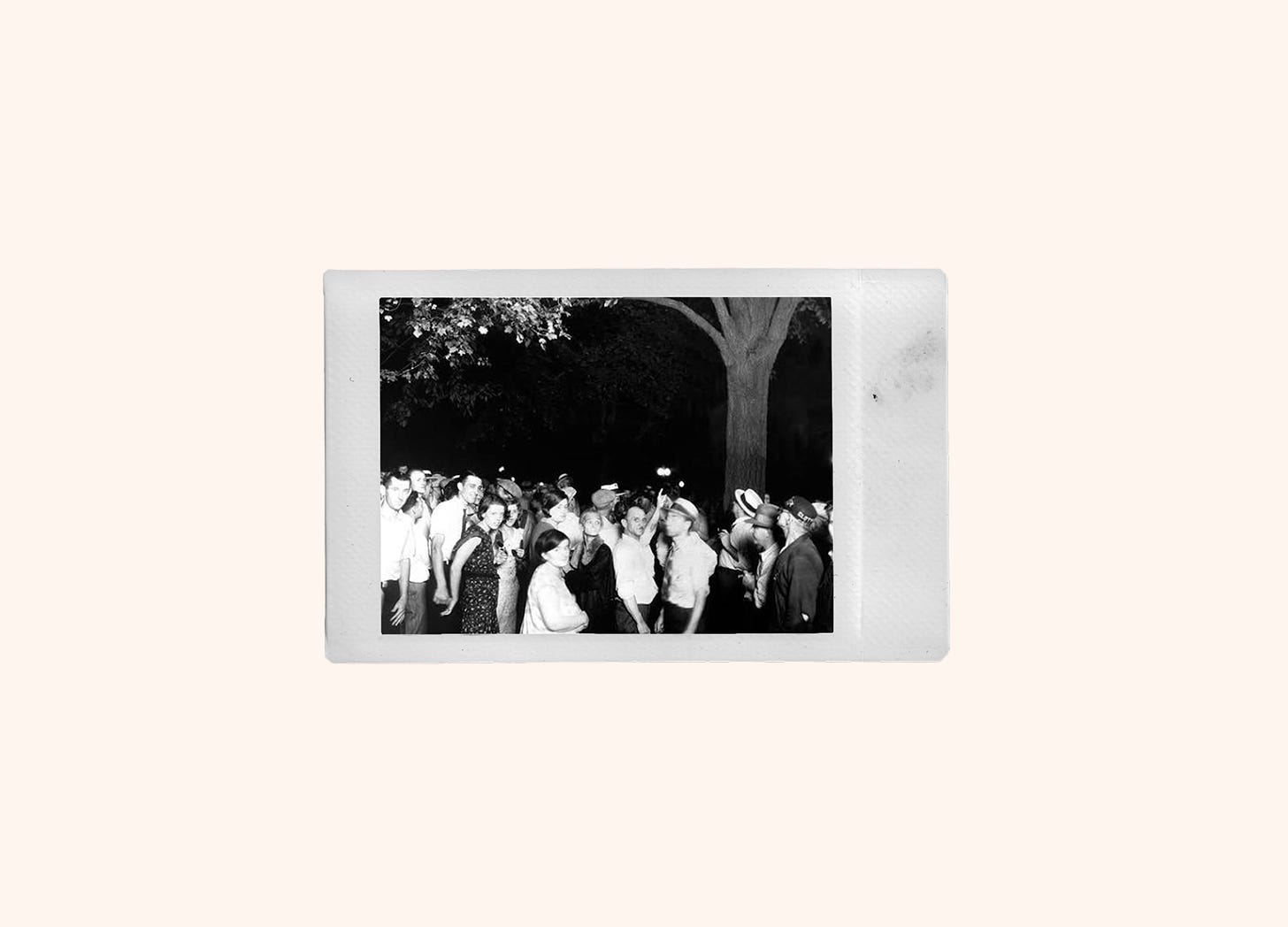
The jouissance that constitutes the violence of anti-blackness secures the order of life itself; sadism in service to the prolongation of life. — Frank Wilderson, Afropessimism
I didn’t have much to say about Jason Arday when he was alive and I have even less to say about him personally now that he’s passed. I did not know Arday yet I feel pangs of shame. I’d felt this anti-black chorus rising—uncomfortable conversations in writer’s group chats and discourse bubbling in my periphery—and chose silence over any sort of defence, thinking my voice doesn’t need to be leant to this. I’m conflicted about how my writing exists within the grand spectacle of modern life. Perhaps I should’ve written something sooner, when I saved that screenshot of a Sunday Times Advertisement on Twitter promoting an article about a student accusing Arday of “being late to class and spouting nonsense”. Perhaps adding to the crowd would’ve made things worse. There is both kindness and cowardice in silence, it seems.
Arday’s death evidences a level of vitriol that’s become harrowingly normal in public life. It echoes something familiar—the crowd cheering at a gladiator’s slaughter in the coliseum, the mob throwing tomatoes at blasphemers in Victorian stocks, the Southern families heading to a black man’s lynching after Sunday Church. This echo is probably why it frightens me more than the ambivalence behind why otherwise “good” people adopt silence when it comes to looking away from the pressing issues of our time. Because we are always looking, force to look, constantly watching others, positioning ourselves, devising our opinions, pining for viral moments, leveraging posts in hope it’ll fetch us a check or change our lives.
How will you use your gaze?
Before I write about anyone publicly, I am governed by one question only: if they were in the room with me, would I be okay reading out what I’m writing? Would I be okay with the worst consequences arising, whatever they are? AKA: Would I stand on fucking business? I tend not to write about anybody until I’m certain the answer is yes. But the etiquette of this parasocial infotainment media sphere doesn’t adhere to such principles, let alone value them, instead it encourages not seeing the subjects of our words as real people, not considering the implications about how the topics we “debate” might affect real lives. There is a natural detachment, from fingertip to screen to subject to the thing itself. Thus, it is easier to conceptualise what we write as purely self-serving fuel and fodder for a non-contact sport where the rules are held strictly against some and laxly against elite and advantaged others, goalposts always shifting.
The British media criminalised a sociology professor for unsubstantiated claims of plagiarism more than it has hounded any of the men substantially named in the Epstein files. An entire institutional machine ramped up its shaming rituals to full tilt over an black man who was flawed but seemed mostly harmless.1 Yet, the same machine never congregates with such scathing bloodlust for presidents or trillionaires who are clearly more terrible, continuously using its kiddy-glove passive voice when it comes to the architects of a genocide or the lying, far-right, bigoted party leader soliciting funds from foreign crypto-billionaires who is trying to usher in a new age of fascism after fucking us all over with Brexit in the name of “sovereignty”.
None of these so-called journalists and right-wing grifters who’ve been foaming at the mouth will look at this moment and show an ounce of self-reflection, humility, remorse or apology for how their words have gone too far. Instead, we will endure their slimy rationalisations, their weaseling as they offer empty and begrudging condolences, silently removing or modifying all their institutionally-backed online tongue-lashings so they can pretend the gratuitous bile they spewed made no contribution to Arday’s death. And we’re still expected to be civil to people who launder their own lack of civility through eugenicist intellectualism and fake moralising? That, to me, is a perfect representation of how insidious racism is, how exhausting, how cowardly this white supremacist ideology is as a collective blight on the planet. An insatiable lust for blood spread thin on so many hands that no one person is ever convicted of holding the blade. But the outcome always, conveniently, materialises black death regardless. More people are going to die this way, I fear—just as many more have already died in far more violent ways before our very eyes and away from them. Discoursed to fucking death, discoursed in fucking death.2
“Words work as release— well-oiled doors opening and closing between intention, gesture. A pulse in a neck, the shiftiness of the hands, an unconscious blink, the conversations you have with your eyes translate everything and nothing. What will be needed, what goes unfelt, unsaid—what has been duplicated, redacted here, redacted there, altered to hide or disguise—words encoding the bodies they cover. And despite everything the body remains.” — Claudia Rankine, Citizen
“The lynching pictures tell us about human wickedness. About inhumanity. They force us to think about the extent of the evil unleashed specifically by racism. Intrinsic to the perpetration of this evil is the shamelessness of photographing it. The pictures were taken as souvenirs and made, some of them, into postcards; more than a few show grinning spectators, good churchgoing citizens as most of them had to be, posing for a camera with the backdrop of a naked, charred, mutilated body hanging from a tree. The display of these pictures makes us spectators, too.” — Susan Sontag, Regarding the Pain of Others
“It wasn’t us who made him fall, no you can’t blame us at all.”
— Bob Dylan, Who Killed Davey Moore

I’m reminded of last year’s story about George Abaraonye, the president-elect of the Oxford Union who wrote “Let’s Go!” in response to Charlie Kirk’s death in a private whatsapp group-chat and, after weeks of old, white men scrutinising his clothing and his conduct, he was forced into a vote of no-confidence.
"The British media criminalised a sociology professor for unsubstantiated claims of plagiarism more than it has hounded any of the men substantially named in the Epstein files. An entire institutional machine ramped up its shaming rituals to full tilt over an black man who was flawed but seemed mostly harmless.1 Yet, the same machine never congregates with such scathing bloodlust for presidents or trillionaires who are clearly more terrible, continuously using its kiddy-glove passive voice when it comes to the architects of a genocide or the lying, far-right, bigoted party leader soliciting funds from foreign crypto-billionaires who is trying to usher in a new age of fascism after fucking us all over with Brexit in the name of “sovereignty”. Absolutely. We have names and proofs of many white male academics who have been proven to have falsified data, stolen grad students' work, plagiarised and covered-up plagiarism by their own favoured students. Anyone in academia knows about this. Open secret. All academics have horror stories to tell. This has been an absolutely vile situation from start to its dreadful end.